Miniature Schnauzer Training Tips
Training a Miniature Schnauzer is an essential part of living well with the breed. These dogs are intelligent, alert, and shaped by strong instincts that influence how they respond to the world around them. Without guidance, they do not simply grow out of undesirable behaviours. Instead, those behaviours often become more established as the dog matures.
With calm, consistent training, Miniature Schnauzers can become steady, responsive, and deeply connected companions. The key is understanding how they think and guiding them through each stage of development, rather than expecting them to work things out on their own.
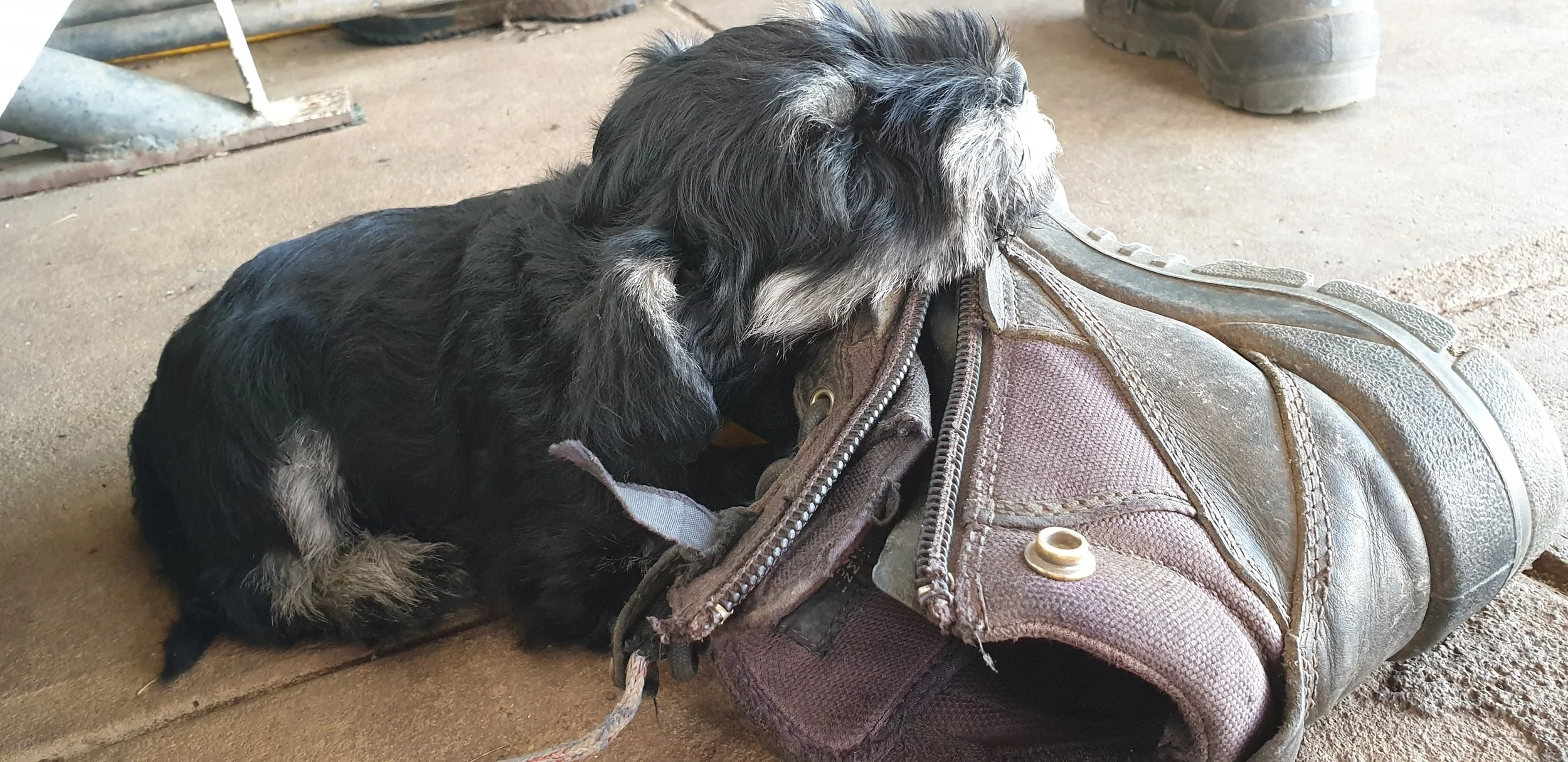
Understanding Schnauzer Behaviour And Temperament
Miniature Schnauzers were originally bred to guard property, alert to change, and hunt vermin. Those instincts are still present today, even in family homes. This explains why schnauzers notice everything and often feel compelled to respond to it.
Barking is one of the most common challenges owners face. It is not a flaw in the breed, but an instinctive response. Training is not about stopping barking entirely, but about teaching the dog when to respond and when to remain calm. Without guidance, alert barking can escalate into constant vocal behaviour that becomes difficult to manage.
Miniature Schnauzers also form strong bonds with their families. They enjoy being involved in daily life and prefer clear leadership. Alongside this closeness, many schnauzers have an independent streak. They are thinkers, not automatic followers. This means training needs to be clear, consistent and effective for the dog.
Why Training Matters
Training provides structure and clarity. Dogs that understand what is expected of them feel more secure in their environment. Regular and ongoing training that includes and promotes calm behaviour, is what teaches the dog how to start offering calm behaviour of its own accord. This regular practice results in calmer behaviour, improved focus, and a greater ability to cope with change.
Without training, Miniature Schnauzers can become anxious, overstimulated, and reactive. They may pull on the lead, bark excessively, or struggle to settle at home. These behaviours are often the dog struggling to see clear leadership and direction, so they try to fill that void by ‘taking charge’ of the situation.
Effective training strengthens communication between dog and human. It allows everyday life to flow more smoothly and makes shared experiences more enjoyable, whether that is walking through a busy area, visiting friends, or simply relaxing at home.
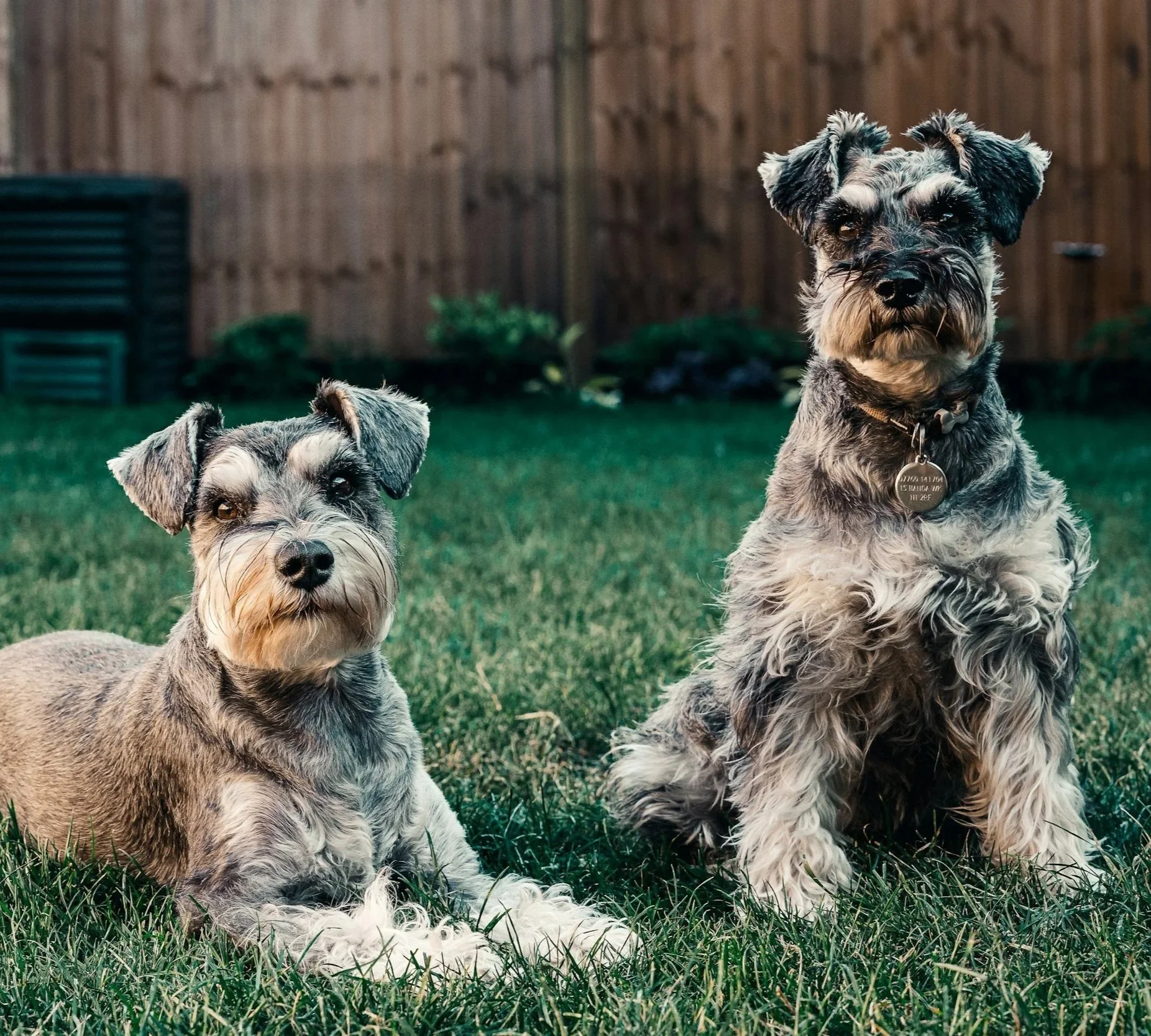
Starting Training Early
Early training sets the foundation for the rest of a dog’s life. Puppies are highly capable learners and are constantly absorbing information from their environment. Every interaction either reinforces good habits or allows unwanted ones to develop.
Waiting until behaviours become problematic often means having to undo habits that are already well established. Effective guidance from the beginning helps puppies understand boundaries, develop impulse control, and learn how to listen to their handler.
Early training also helps puppies transition through adolescence more smoothly. This stage is often challenging, but dogs with a solid foundation cope far better than those who have had little guidance.
Using Clear Communication And Consistency
Miniature Schnauzers respond best to clear communication and consistency. They do not need a long list of commands. A small number of well-taught cues, used consistently, will serve them throughout their life.
Training for calm behaviour, focus, and impulse control will teach a dog how to make its own good choices. This quickly builds reliability and trust with its handler.
Everyone in the household should use the same cues and expectations. Mixed messages create confusion and slow progress.
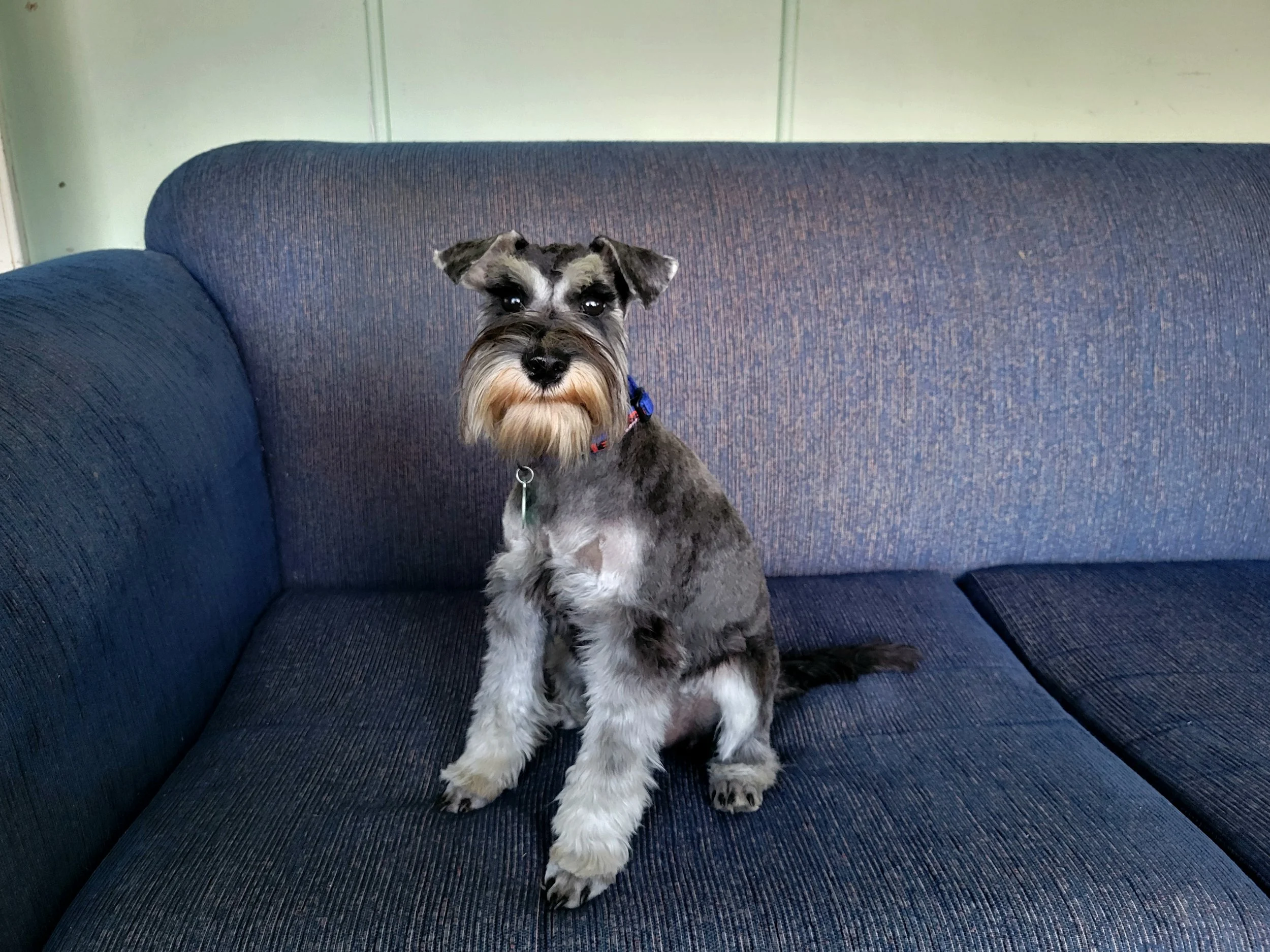
Managing Barking And Impulsive Behaviour
Because Miniature Schnauzers are naturally alert, barking needs to be addressed early. Teaching them to listen to their handler rather than be reactive, and practising calm behaviour training on a daily basis, helps prevent barking from becoming habitual.
Impulsive behaviour often comes from overstimulation rather than defiance. Dogs that are constantly reacting to their environment struggle to settle. Structured routines, appropriate exercise, and daily calming training activities help schnauzers regulate their responses and make better decisions.
Training should focus on teaching the dog how to pause and look to their handler for guidance, rather than reacting automatically.
The Role Of Socialisation
Socialisation is an important part of training, but it needs to be done thoughtfully. Calm exposure to different environments, people, and other dogs helps build confidence and resilience.
Uncontrolled group play or highly stimulating environments will overstimulate or overwhelm a young schnauzer and drastically reduce their ability to listen. Quality interactions, guided outings, and calm observation are often far more beneficial than constant activity.
Well-socialised schnauzers learn how to move through the world without becoming reactive or overexcited.
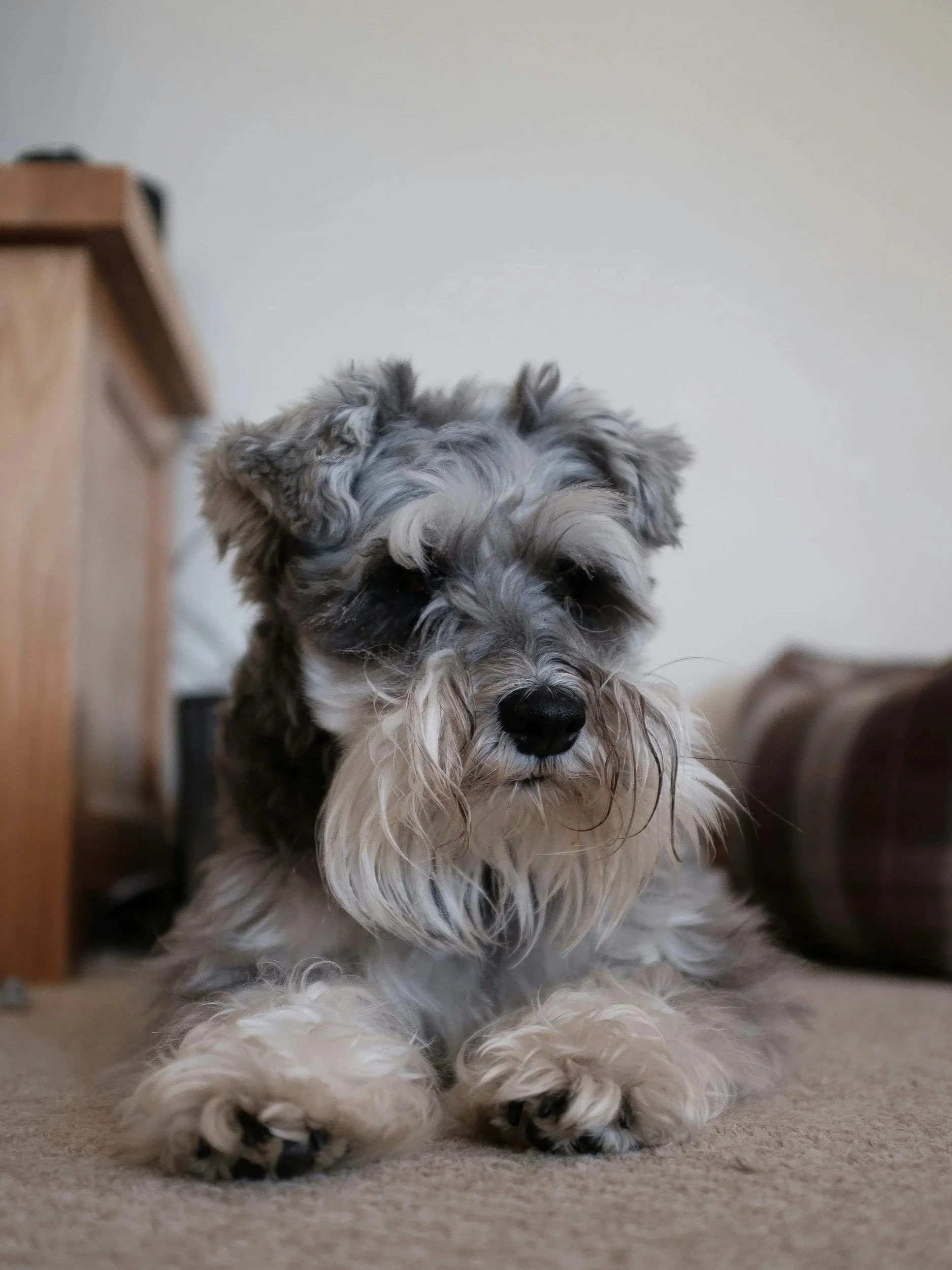
Mental Stimulation And Daily Structure
Miniature Schnauzers are intelligent dogs that need mental engagement. This can be in the form of training sessions, learning new skills, and practising polite behaviour regularly. All this will result in a calm and focused young dog.
Providing regular raw meaty bones to chew serves two purposes: it is the best possible natural teeth cleaner and chewing on bones provides a natural gratification and stimulus for the dog, it aids in jaw and muscle development and helps it to release tension.
Mental work, i.e. training, is just as important as physical exercise. Dogs that regularly practice routine good manners and calm behaviours are far less likely to develop boredom-driven behaviours such as excessive barking or destructive habits.
Daily structure also plays a key role. Predictable routines around meals, exercise, training, and rest help schnauzers feel secure and settled.
Teaching Calm And Relaxation
One of the most important skills a Miniature Schnauzer can learn is how to relax. Calm behaviour does not happen naturally for many dogs. It is taught through repetition, guidance, and consistent routines.
Teaching a dog how to settle at home, rest quietly, and remain calm in stimulating environments greatly improves the quality of life for both dog and owner. This skill is increasingly important to practice as dogs transition through early adolescence into maturity.
Ongoing Support From Merindah Farm
At Merindah Farm, training is not viewed as a short phase, but as an ongoing process that evolves as the dog grows. Our approach is based on understanding the breed, guiding behaviour early, and supporting families long term.
With patience, consistency, and realistic expectations, Miniature Schnauzers grow into calm, well-mannered companions who are a pleasure to live with. Training is about communication and guidance that the dog understands, and building a respectful relationship that lasts a lifetime.